
Bringing the Voice of Travelers into the Booking Journey
Using authentic hotel content and structured guest insights to help travelers book with greater confidence.
Choosing a hotel involves more than comparing prices and looking at professional photographs. Travelers want to understand what staying there is actually like.
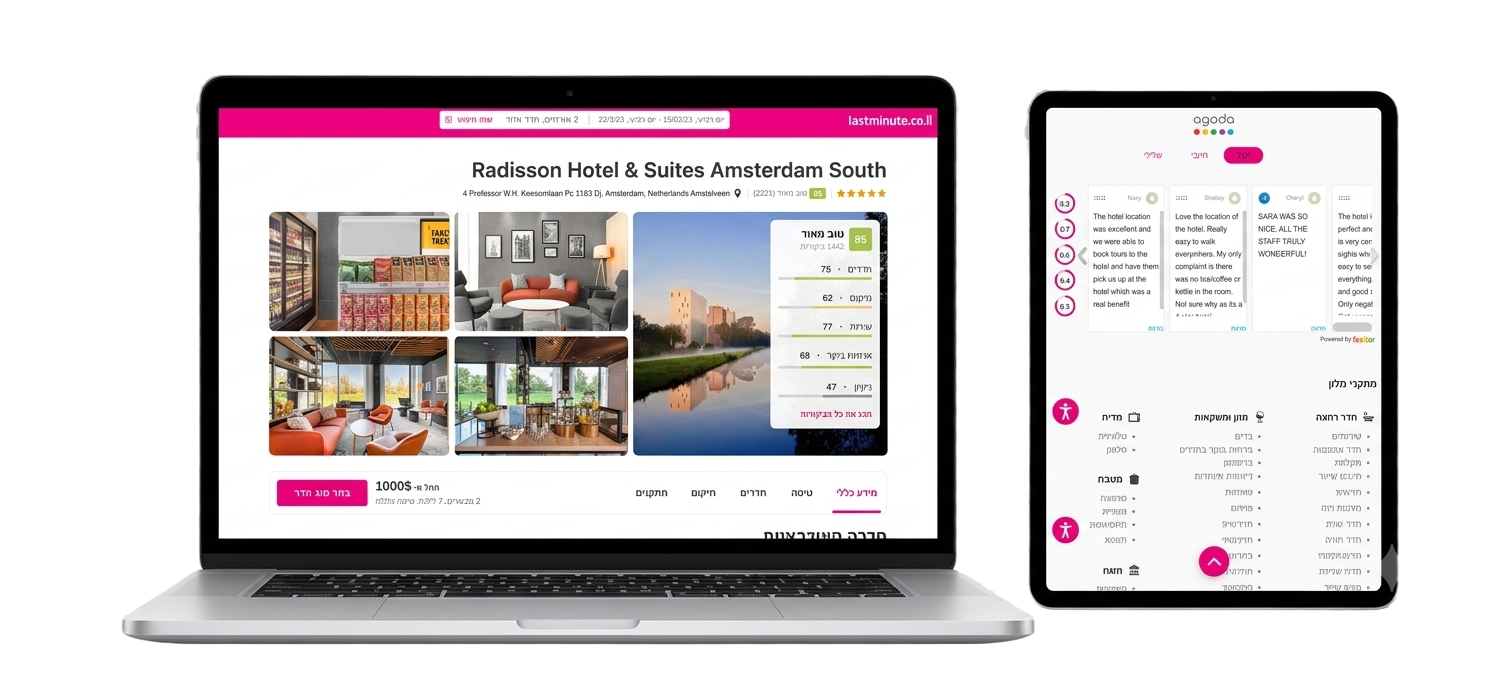
At Feelter, we worked with Lastminute.com Group to integrate selected user-generated content directly into its hotel-booking journey. We then ran an A/B test to measure how this additional layer of traveller insight influenced behaviour and conversion.
My role: Chief Product OfficerClient: Lastminute.com GroupFocus: Travel UGC, booking experience and experimentationMethods: Product integration, content analysis and A/B testing



Contents


The Challenge
Hotel information explains what a property offers.
Travelers explain what it feels like.
Hotel pages already contained descriptions, photographs, prices and facilities. However, this information could not always answer the more personal questions behind a booking decision:
- Is the location genuinely convenient?
- Are the rooms as clean as they appear?
- What is the service actually like?
- Are the facilities suitable for this kind of trip?
- What do previous guests consistently mention?
We wanted to bring these insights into the booking experience without overwhelming users or distracting them from completing their reservation.
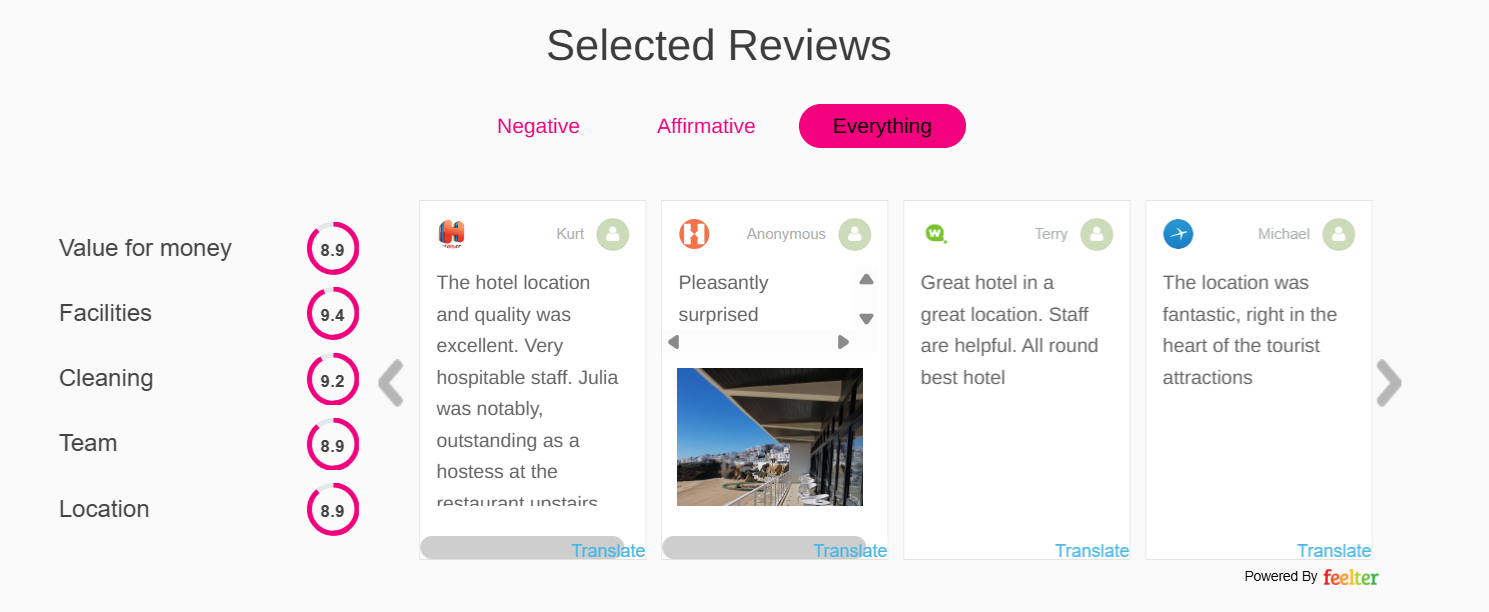


Hotel Aspect Scores
Turning thousands of traveler opinions into information users could scan quickly.
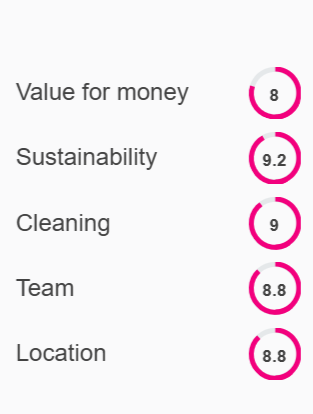
Alongside individual pieces of UGC, we introduced scores for important aspects of the hotel experience, including:
- Service
- Cleanliness
- Facilities
- Location
- Overall guest experience
These scores transformed a large volume of unstructured traveler content into a clear and accessible overview.
Users could quickly identify a hotel’s strengths and then explore the underlying content when they wanted more detail.

My Product Leadership
I helped shape the experience and turn it into a measurable product experiment.
I owned the product direction and led the collaboration between Feelter’s team and Lastminute.com Group. I shaped how UGC and hotel aspect scores would fit into the existing booking journey, coordinated the product implementation and defined how its impact would be tested.
My work included:
- Defining the product experience
- Translating client needs into requirements
- Designing how UGC would appear within the booking journey
- Structuring the hotel aspect scores
- Prioritising content relevance and usability
- Coordinating development and implementation
- Designing and evaluating the A/B test
The objective was not simply to display more content. It was to determine whether relevant traveller perspectives could meaningfully improve the booking experience.
The Experiment
We tested the complete experience against a version without Feelter content.
Users were divided between two experiences:
- A version of the booking journey containing Feelter’s selected UGC and hotel aspect scores
- A control version in which users did not see Feelter content
We measured how the experience affected user engagement and completed bookings.
This allowed us to evaluate the commercial impact of UGC rather than relying only on clicks or impressions.
The Impact
Travelers explored for longer and converted more often.
Compared with the control experience, the version containing Feelter’s UGC delivered:
- 48% increase in time spent on the site
- 4% increase in conversion rate
- Greater engagement with hotel information
- A richer and more informative booking journey
The results showed that helping users explore a hotel in greater depth did not prevent them from booking. It gave them additional context to make the decision with more confidence.
We didn’t add social content simply to make hotel pages more engaging. We used it to make booking decisions more informed—and more likely to happen.
The Solution
Relevant UGC, selected and presented at the moment it mattered.
Feelter collected and analyzed content shared by travelers across social networks. The most relevant content about each hotel was selected and integrated directly into the booking journey.
Instead of asking users to leave the platform and search elsewhere, the experience brought authentic traveler perspectives into the hotel page they were already viewing.
This helped users explore a property through a combination of official information and real guest experiences.
Bringing the Voice of Travelers into the Booking Journey
Using authentic hotel content and structured guest insights to help travelers book with greater confidence.
Choosing a hotel involves more than comparing prices and looking at professional photographs. Travelers want to understand what staying there is actually like.
At Feelter, we worked with Lastminute.com Group to integrate selected user-generated content directly into its hotel-booking journey. We then ran an A/B test to measure how this additional layer of traveller insight influenced behaviour and conversion.
My role: Chief Product OfficerClient: Lastminute.com GroupFocus: Travel UGC, booking experience and experimentationMethods: Product integration, content analysis
and A/B testing
Contents


The Challenge
Hotel information explains what a property offers.
Travelers explain what it feels like.
Hotel pages already contained descriptions, photographs, prices and facilities. However, this information could not always answer the more personal questions behind a booking decision:
- Is the location genuinely convenient?
- Are the rooms as clean as they appear?
- What is the service actually like?
- Are the facilities suitable for this kind of trip?
- What do previous guests consistently mention?
We wanted to bring these insights into the booking experience without overwhelming users or distracting them from completing their reservation.
The Solution
Relevant UGC, selected and presented at the moment it mattered.
Feelter collected and analyzed content shared by travelers across social networks. The most relevant content about each hotel was selected and integrated directly into the booking journey.
Instead of asking users to leave the platform and search elsewhere, the experience brought authentic traveler perspectives into the hotel page they were already viewing.
This helped users explore a property through a combination of official information and real guest experiences.
Hotel Aspect Scores
Turning thousands of traveler opinions into information users could scan quickly.
Alongside individual pieces of UGC, we introduced scores for important aspects of the hotel experience, including:
- Service
- Cleanliness
- Facilities
- Location
- Overall guest experience
These scores transformed a large volume of unstructured traveler content into a clear and accessible overview.
Users could quickly identify a hotel’s strengths and then explore the underlying content when they wanted more detail.
My Product Leadership
I helped shape the experience and turn it into a measurable product experiment.
I owned the product direction and led the collaboration between Feelter’s team and Lastminute.com Group. I shaped how UGC and hotel aspect scores would fit into the existing booking journey, coordinated the product implementation and defined how its impact would be tested.
My work included:
- Defining the product experience
- Translating client needs into requirements
- Designing how UGC would appear within the booking journey
- Structuring the hotel aspect scores
- Prioritising content relevance and usability
- Coordinating development and implementation
- Designing and evaluating the A/B test
The objective was not simply to display more content. It was to determine whether relevant traveller perspectives could meaningfully improve the booking experience.
The Experiment
We tested the complete experience against a version without Feelter content.
Users were divided between two experiences:
- A version of the booking journey containing Feelter’s selected UGC and hotel aspect scores
- A control version in which users did not see Feelter content
We measured how the experience affected user engagement and completed bookings.
This allowed us to evaluate the commercial impact of UGC rather than relying only on clicks or impressions.
The Impact
Travelers explored for longer and converted more often.
Compared with the control experience, the version containing Feelter’s UGC delivered:
- 48% increase in time spent on the site
- 4% increase in conversion rate
- Greater engagement with hotel information
- A richer and more informative booking journey
The results showed that helping users explore a hotel in greater depth did not prevent them from booking. It gave them additional context to make the decision with more confidence.
We didn’t add social content simply to make hotel pages more engaging. We used it to make booking decisions more informed—and more likely to happen.
Back To Homepage |
Bringing the Voice of Travelers into the Booking Journey
Using authentic hotel content and structured guest insights to help travelers book with greater confidence.
Choosing a hotel involves more than comparing prices and looking at professional photographs. Travelers want to understand what staying there is actually like.
At Feelter, we worked with Lastminute.com Group to integrate selected user-generated content directly into its hotel-booking journey. We then ran an A/B test to measure how this additional layer of traveller insight influenced behaviour and conversion.
My role: Chief Product OfficerClient: Lastminute.com GroupFocus: Travel UGC, booking experience and experimentationMethods: Product integration, content analysis
and A/B testing
Contents
The Challenge
Hotel information explains what a property offers.
Travelers explain what it feels like.
Hotel pages already contained descriptions, photographs, prices and facilities. However, this information could not always answer the more personal questions behind a booking decision:
- Is the location genuinely convenient?
- Are the rooms as clean as they appear?
- What is the service actually like?
- Are the facilities suitable for this kind of trip?
- What do previous guests consistently mention?
We wanted to bring these insights into the booking experience without overwhelming users or distracting them from completing their reservation.
The Solution
Relevant UGC, selected and presented at the moment it mattered.
Feelter collected and analyzed content shared by travelers across social networks. The most relevant content about each hotel was selected and integrated directly into the booking journey.
Instead of asking users to leave the platform and search elsewhere, the experience brought authentic traveler perspectives into the hotel page they were already viewing.
This helped users explore a property through a combination of official information and real guest experiences.
Hotel Aspect Scores
Turning thousands of traveler opinions into information users could scan quickly.
Alongside individual pieces of UGC, we introduced scores for important aspects of the hotel experience, including:
- Service
- Cleanliness
- Facilities
- Location
- Overall guest experience
These scores transformed a large volume of unstructured traveler content into a clear and accessible overview.
Users could quickly identify a hotel’s strengths and then explore the underlying content when they wanted more detail.
My Product Leadership
I helped shape the experience and turn it into a measurable product experiment.
I owned the product direction and led the collaboration between Feelter’s team and Lastminute.com Group. I shaped how UGC and hotel aspect scores would fit into the existing booking journey, coordinated the product implementation and defined how its impact would be tested.
My work included:
- Defining the product experience
- Translating client needs into requirements
- Designing how UGC would appear within the booking journey
- Structuring the hotel aspect scores
- Prioritising content relevance and usability
- Coordinating development and implementation
- Designing and evaluating the A/B test
The objective was not simply to display more content. It was to determine whether relevant traveller perspectives could meaningfully improve the booking experience.
The Experiment
We tested the complete experience against a version without Feelter content.
Users were divided between two experiences:
- A version of the booking journey containing Feelter’s selected UGC and hotel aspect scores
- A control version in which users did not see Feelter content
We measured how the experience affected user engagement and completed bookings.
This allowed us to evaluate the commercial impact of UGC rather than relying only on clicks or impressions.
The Impact
Travelers explored for longer and converted more often.
Compared with the control experience, the version containing Feelter’s UGC delivered:
- 48% increase in time spent on the site
- 4% increase in conversion rate
- Greater engagement with hotel information
- A richer and more informative booking journey
The results showed that helping users explore a hotel in greater depth did not prevent them from booking. It gave them additional context to make the decision with more confidence.
We didn’t add social content simply to make hotel pages more engaging. We used it to make booking decisions more informed—and more likely to happen.

Read More
Back To Homepage |